Homepage
Aloha!
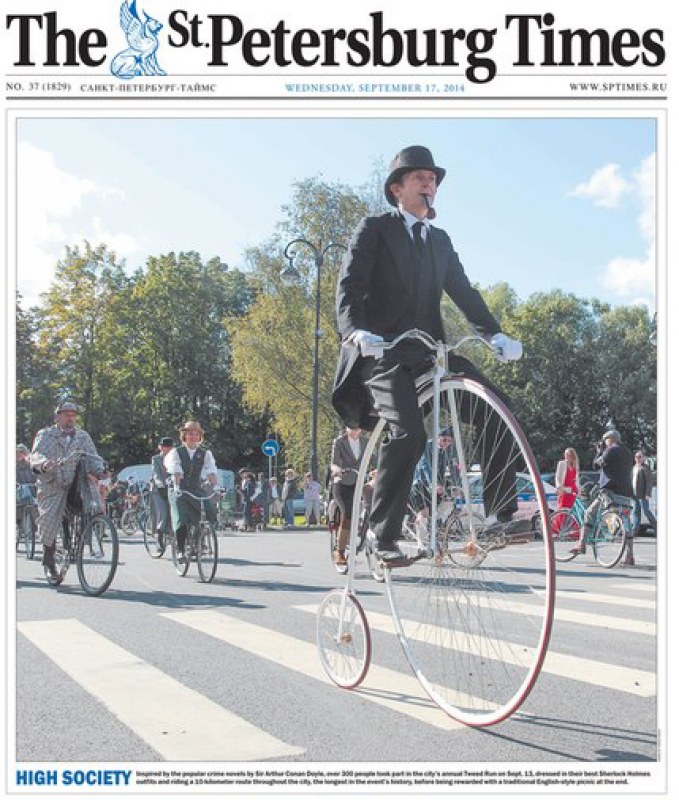
My name is Sergey Shulubin and this page is devoted to my hobby - a fixed gear cycling all styles: city commuting, alley cat races, curbing penny farthing etc. dinosaurs and my favourite - autonomous bike tours and brevets, i.e. cycling marathons from 200 km and more by the Audax Club Parisien system and their ilk, which I completed a lot since 2002, in 2014 I switched to a fixed gear and in 2015 the first of the Russians completed Paris-Brest-Paris fixed gear.
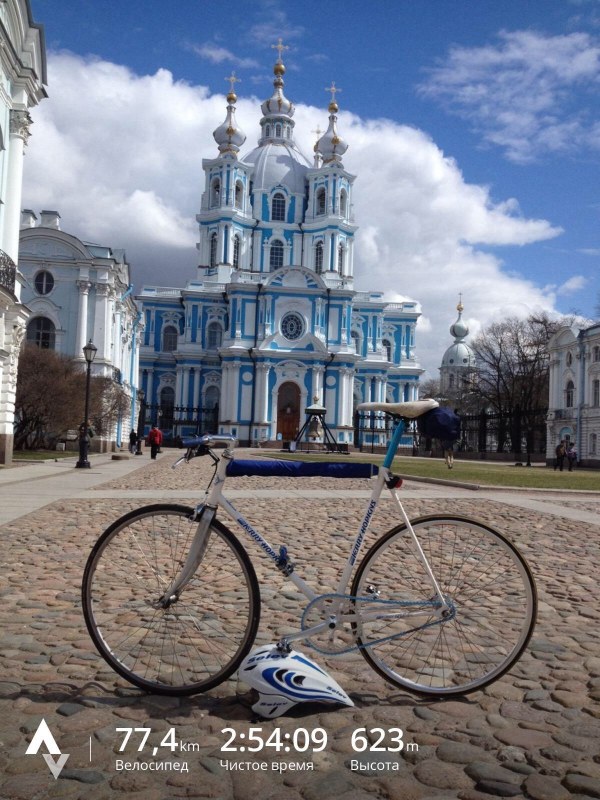
At one time a good article about riding fixed gear was written by Viktor Okolnichnikov from Arkhangelsk, which, as far as I understand, in 2013 became the first Russian to pass the superrandonnier series 200-300-400-600km fixed. My own philosophy in this regard is that the simpler the bike the better, because it all depends on who is riding it, not on how many gears, how ergonomic the steering wheel is etc. Many of those who consider themselves to be an athlete because they bought a bicycle more expensive than a car and are ready to answer all questions with landing and circular pedaling, far from those who passed Tour de France, Paris-Brest-Paris and so on 100 years ago in a fixed transfer as there was nothing else at those times. And as my experience shows, if you plunge into it with your head, then amazing things become possible, in particular, driving uphill in a big gear, plus some interesting useful skills are acquired.
Another plus of a simple bicycle - Randonner's life accustoms to being able to rely only on yourself in case of technical problems, so people who are unable to replace the spoke or deal with a torn chain in a bike marathon are doomed, in this sense a fixed gear gives 100 points ahead in terms of reliability and other aspects, in particular a jumpered chain and a bent switch can be a dramatic problem, many know the case at the Vologda-Onega-Ladoga marathon, when a carbon fiber pen broke at the frame following twisted derailleur and chain.
Well, apart from the bicycle itself, my idea is that it is absolutely not necessary to lose the human look, pulling on the lycra, shoes that can not be walked on, consuming gels and isotonics and constantly using the ointment for the place where they sit - my experience led me to that this is not necessary for brevette, so I travel in shorts for surfing the last few years, because ventilation is much more important, they dry faster and in general a lot of pluses, including pockets. Bike sandals allow to feel like an ordinary person, plus it is convenient in catching pedal. I use no chemistry just the things coming along the way, giving preference to soups, bakery, coffee and red or white wine depending on weather.


